December 10 marks Nobel Prize Day, honoring outstanding achievements in science, literature, peace, and economics. Discover everything about the 2025 laureates, the Stockholm Nobel banquet, the Nobel Prize Museum celebrations, and the history of Alfred Nobel.
Nobel Day 2025 — A Global Celebration of Human Achievement
Every year on December 10, the world turns its attention to Stockholm and Oslo for one of humanity’s most prestigious celebrations: the awarding of the Nobel Prizes. The date is not a coincidence. According to Alfred Nobel’s will, it is the anniversary of his death, chosen specifically as the day to honor the people whose work has “conferred the greatest benefit to humankind.”
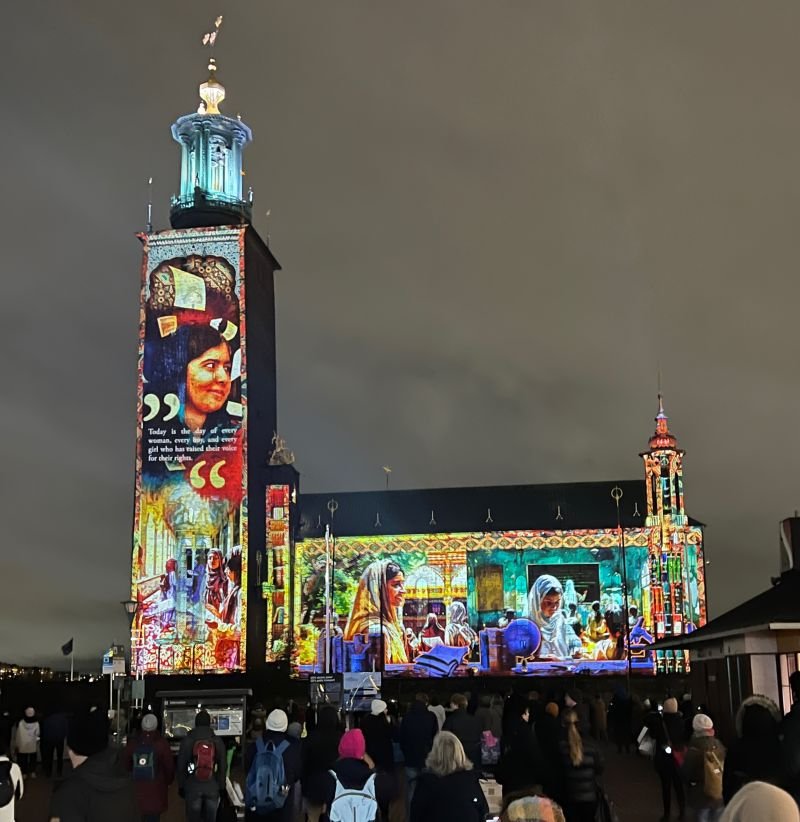
In Stockholm, the atmosphere is filled with ceremony, elegance, and international attention. At the Stockholm Concert Hall, laureates receive their Nobel medals and diplomas from the hands of King Carl XVI Gustaf. Later in the evening, the celebration continues at the world-famous Nobel Banquet in Stockholm City Hall, an event marked by tradition, artistry, and impeccable gastronomy. At the same time, in Oslo, the Nobel Peace Prize ceremony is held with the same level of global interest.
Nobel Day is not simply a ceremonial event; it is a moment when the world pauses to recognize the thinkers, creators, and leaders who have changed the course of history.
The 2025 Nobel Laureates — Honoring Science, Literature, Peace and Economic Insight
Here is an overview of the 2025 laureates and their remarkable contributions:
Nobel Prize in Physics 2025
John Clarke, Michel H. Devoret, and John M. Martinis
Awarded for the groundbreaking discovery of macroscopic quantum tunneling and energy quantization in an electric circuit — pioneering work that brings quantum technology closer to full-scale application. Their findings form the foundation for progress in quantum computers and ultra-sensitive measurement systems.
Nobel Prize in Chemistry 2025
Omar M. Yaghi, Susumu Kitagawa, and Richard Robson
Recognized for the development of metal–organic frameworks (MOFs), an innovative class of materials with enormous potential for gas storage, filtration, environmental cleanup, and future energy solutions. MOFs have reshaped modern materials science.
Nobel Prize in Physiology or Medicine 2025
Mary E. Brunkow, Fred Ramsdell, and Shimon Sakaguchi
Awarded for their discoveries regarding immune regulation and the mechanisms that prevent autoimmunity. Their work on regulatory T-cells has revolutionized understanding of immune tolerance and paved the way for new therapies for autoimmune disease, allergies, cancer, and transplantation.
Nobel Prize in Literature 2025
László Krasznahorkai
Honored for his visionary and stylistically distinctive literary universe, one that unflinchingly portrays human suffering, existential turmoil, and the search for meaning. His prose has influenced generations of writers and artists around the world.
Nobel Peace Prize 2025
María Corina Machado
Awarded for her unwavering commitment to democratic rights, non-violent resistance, and the struggle for a peaceful transition to democracy in Venezuela. Her leadership has become a symbol of civil courage and hope for millions.
Prize in Economic Sciences 2025
Joel Mokyr, Philippe Aghion, and Peter Howitt
Recognized for transformative theories on technological progress, innovation, and the concept of creative destruction — the driving forces behind long-term economic development. Their research has shaped modern economic policy and growth theory.
Together, these laureates represent the extraordinary range of human curiosity and determination that the Nobel Prize seeks to celebrate.
Celebrations in Stockholm — From Royal Ceremony to the Nobel Banquet
The Nobel Banquet remains one of the most iconic events of the year. In the Blue Hall of Stockholm City Hall, more than 1,300 guests gather under glittering chandeliers to enjoy a carefully curated dinner prepared by world-class chefs. The menu is kept secret until the moment it is served, and the presentation is often as artistic as the dishes themselves. Speeches, orchestral performances, and elegant gowns create a sense of timeless grandeur.
But the celebrations extend beyond the banquet.
At the Nobel Prize Museum in Stockholm’s Old Town, festivities last throughout the day. On December 10, the museum hosts live screenings of the ceremonies from Stockholm and Oslo, guided tours, live music, and a special “Nobel Lunch” inspired by historic banquet menus. The museum transforms into a vibrant cultural hub connecting history, science, art, and innovation.
One of the highlights of 2025 is the exhibition Nobel Creations 2025, where fashion design students from Beckmans College interpret the year’s Nobel Prizes through couture. Visitors can see chemistry turned into textile structure, quantum physics transformed into shapes and colors, and literature translated into artistic silhouettes. It is a celebration of creativity that bridges science and art.
For anyone in Stockholm, the museum is the perfect place to experience Nobel Day in all its depth — not only as a ceremony but as a living cultural movement.
Why December 10? The Story Behind Alfred Nobel
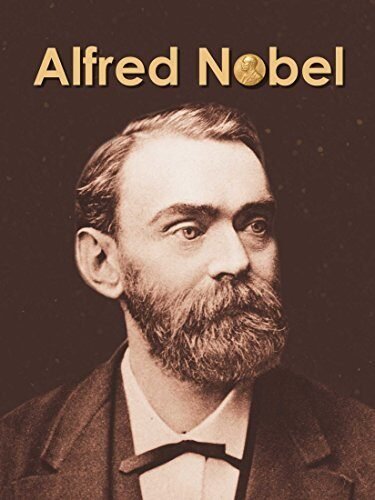
Alfred Bernhard Nobel (1833–1896) was a Swedish chemist, engineer, inventor, businessman, and philanthropist. Although best known for inventing dynamite, Nobel held 355 patents and worked across multiple disciplines. His life changed dramatically after a premature obituary — mistakenly published when his brother died — described him as “the merchant of death.” It is believed that this negative portrayal deeply affected him and inspired him to shape a legacy dedicated to peace, knowledge, and human advancement.
In his final will, Nobel left the majority of his fortune to establish the Nobel Prizes in physics, chemistry, physiology or medicine, literature, and peace. The first awards were presented in 1901. In 1968, the Prize in Economic Sciences was added in his memory.
Today, the Nobel Prize stands as one of the world’s most meaningful recognitions of excellence — a symbol of human progress and aspiration.
Conclusion: A Day for Reflection, Celebration and Inspiration
Nobel Day 2025 is more than a ceremonial occasion. It is a global moment of reflection — a reminder that curiosity, perseverance, creativity, and moral courage can change the world. In celebrating this year’s laureates, we honor not only their achievements but the vision of Alfred Nobel, who believed in recognizing those who push humanity forward.
Congratulations to the 2025 Nobel Prize laureates — and may their work continue to inspire generations to come.