Possible Ban, Fines, or Prison: What Gianluca Prestiani Could Face If Found Guilty

UEFA and Spanish authorities are reviewing allegations involving Gianluca Prestiani, with potential penalties ranging from suspension and fines to prison under Spain’s hate crime laws.
Gianluca Prestiani could face serious consequences if he is found guilty following the ongoing investigation into alleged racist conduct. European football’s governing body, UEFA, has a long-standing record of taking firm action against discrimination, and past cases suggest that sanctions can be imposed swiftly. In similar situations, verdicts have been delivered within days, sometimes resulting in suspended one-match bans and financial penalties for the players involved. With an important match schedule and limited time between fixtures, any decision in this case could also be accelerated.
UEFA treats allegations of racism with the utmost seriousness. Over the years, the organization has strengthened its disciplinary framework to ensure that discriminatory behavior is met with strict punishment. Depending on the findings of the investigation, Prestiani could face a match suspension, a suspended ban, or substantial fines. Suspensions may apply to domestic competitions or European tournaments, depending on jurisdiction and the severity of the offense. Even a one-match ban can carry significant sporting consequences, especially during high-stakes competitions such as the Champions League.
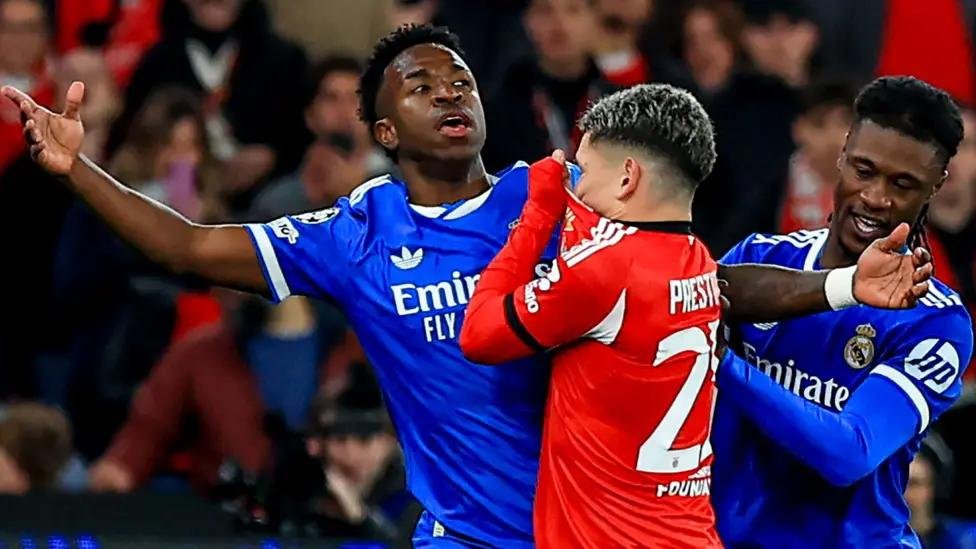
Beyond UEFA’s disciplinary process, the matter may extend into the legal arena in Spain. The Spanish Footballers Association (AFE) has reportedly become involved, formally requesting a full investigation and urging that, if proven, the incident be treated under hate crime legislation. Article 510 of the Spanish Penal Code addresses hate crimes and discriminatory actions, providing for penalties that range from financial fines to prison sentences of one to four years. This legal dimension significantly raises the stakes, as it moves the case beyond football regulations into criminal law.
If authorities determine that the actions meet the threshold of a hate crime, Prestiani could face prosecution in Spanish courts. Criminal proceedings would require substantial evidence, including witness testimonies, video footage, and official reports. The standard of proof in criminal cases is considerably higher than in sporting disciplinary hearings, meaning the legal outcome could differ from UEFA’s decision. Nevertheless, the possibility of prison time highlights how seriously Spain views discrimination-related offenses.
For the player, the consequences extend beyond formal sanctions. Reputational damage can be immediate and lasting. In today’s football environment, public scrutiny is intense, and social media amplifies every development. Sponsors, clubs, and supporters often react strongly to allegations involving racism. Even before a final verdict, the mere existence of an investigation can affect a player’s career trajectory, transfer prospects, and relationship with fans.

Clubs also face indirect pressure. Teams are expected to uphold strict codes of conduct and promote inclusivity. If a player is found guilty, the club may issue internal disciplinary measures or public apologies to protect its image. In some cases, educational programs and anti-discrimination campaigns are introduced as corrective measures.
Ultimately, the outcome will depend on the evidence gathered and the decisions of both UEFA’s disciplinary bodies and, potentially, Spanish judicial authorities. If found not guilty, Prestiani would likely be cleared to continue playing without sanction. However, if the allegations are substantiated, penalties could range from sporting suspensions and fines to far more severe criminal consequences under Spanish law.
This case serves as a reminder of football’s ongoing battle against racism and discrimination. Governing bodies continue to emphasize zero tolerance, and legal systems increasingly support that stance with enforceable penalties. For Prestiani, the coming days may prove decisive, not only for his career but also for the broader message sent about accountability in modern football.